Wilpattu
Sri Lanka's largest national park, and its quietest. Leopards, sloth bears and natural lakes — with a fraction of the Jeep traffic you'll meet at Yala.
- Size
- Around 1,300 km² — the largest park in Sri Lanka
- Known for
- Leopard, sloth bear, the villus
- Nearest base
- Anuradhapura, about an hour
- Drives
- Gate opens 6am; afternoon drives also run
- Pairs with
- The Cultural Triangle — it's the same part of the country
Wilpattu is the largest national park in Sri Lanka and among the least visited, and those two facts are related.
It was closed for the best part of two decades during the civil conflict and only reopened properly in 2010. Yala had those years to become the name everyone knows. Wilpattu got them back as forest — which is why it now feels like a much older, much emptier place than a park an hour from a major town has any right to.
What it’s actually like
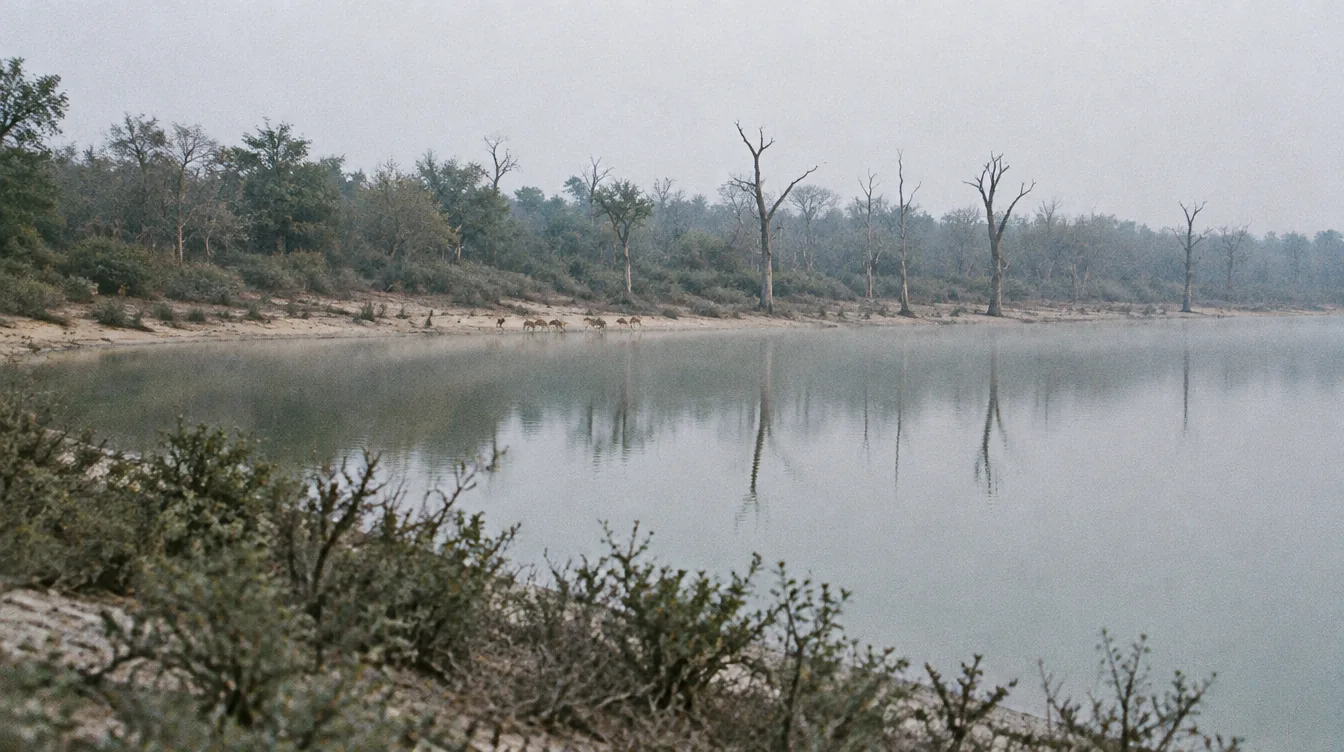
Dry-zone forest rather than open plain, which changes how the driving feels. You see less far, so you sit more. The tracks wind between stands of trees and open suddenly onto a villu — a natural basin, full or half-full depending on the month — and that’s where the day happens.
The rhythm is slower than Yala and most people find it better. You are not chasing radio calls between vehicles. On a quiet morning you may see three other Jeeps all day, and it is entirely normal to spend forty minutes beside one lake watching nothing much and then everything at once.
When to come
February to October is the reliable window, with the dry months concentrating animals around the remaining water. May to September is strongest for game viewing within that window. June and July are worth singling out — the palu fruit ripens and the sloth bears come for it, which is the best chance you’ll get at an animal most visitors never see.
The park can shut at short notice after heavy rain, when the sand tracks stop being passable. That’s most likely in the inter-monsoon periods. It isn’t common, but it’s real, and we’d rather build a plan that has somewhere else to be than pretend it can’t happen.
How long
Two nights. One gives you a single morning drive and a long journey either side of it, which isn’t enough to justify getting there.
Two nights means two mornings at the gate, and since the first ninety minutes after opening are when the cats move, that’s the part that actually matters. An afternoon drive is a different park — slower, better for birds and elephants — and worth doing once.
Where it fits in a trip
This is the practical argument for Wilpattu over Yala, and it’s rarely made.
It sits an hour from Anuradhapura. If you’re doing the ancient cities — and most first trips to Sri Lanka do — the park is already on your route. Yala is on the far side of the country, and reaching it usually means a long transfer that exists purely to get you to a gate.
So Wilpattu can be a wildlife stop that costs you no extra travelling. That’s unusual, and it’s why we use it more than the search volume would suggest.
The honest version
You may not see a leopard. That is the trade, and anyone who tells you otherwise is selling something. What you get instead is a park that feels like wilderness rather than a queue, sloth bears that are genuinely more likely here than anywhere else, and mornings where yours is the only vehicle at the water.
If a guaranteed photograph matters more than that, we’ll route you to Yala and say so plainly.
Before you build a trip around it.
Want this in the route?
Tell us your month.
A few short questions, one of our team on the other end. Reply within 48 hours — no funnels, no call centres, no auto-replies pretending to be people.