Mirissa
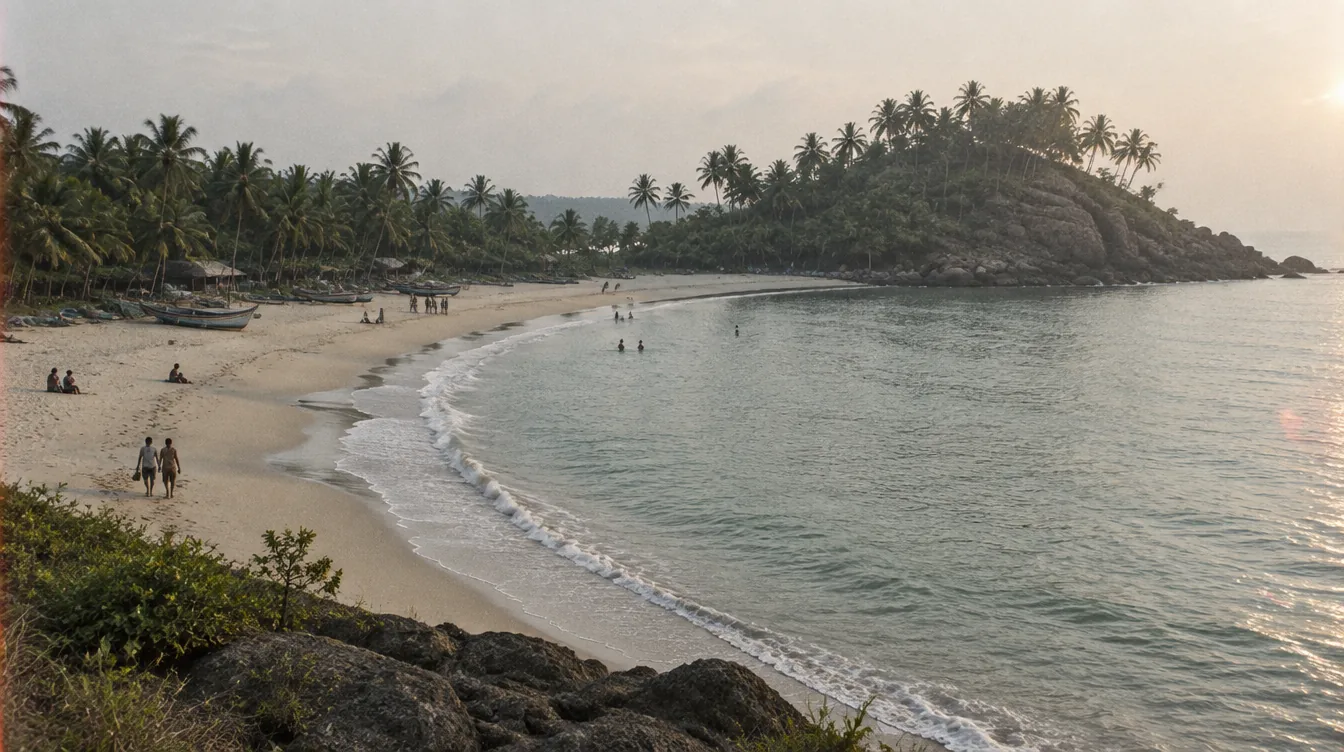
Blue whales offshore from December, a crescent of sand that fills up in January, and the quieter bays fifteen minutes either side of it.
- Known for
- Blue whale watching, the crescent beach
- Whale season
- Roughly December to April
- Boats leave
- Around 6.30–7am; be at the harbour by 6
- Swimming
- Safest Nov–April in the main bay; there are real rip currents here
- Pairs with
- The quieter bays east, and Yala at the end of the road
Mirissa is a crescent of sand on the south coast with a rock at one end, a working harbour at the other, and the deep ocean unusually close offshore.
That last detail is the one that matters. The continental shelf drops away nearer to land here than almost anywhere else, which puts blue whales — the largest animals that have ever lived — within a morning’s boat ride of the beach.
The whales
Roughly December to April. Boats leave the harbour around half past six, when the sea is at its calmest, and are generally back by mid-morning.
Sightings are common in season. They are not guaranteed, and any operator who guarantees them is describing a sales process rather than the ocean.
The choice of boat matters more than the choice of month. Some operators chase — closing on the animal, cutting across its line, crowding it with other vessels. It is unpleasant to be part of and it is bad for the whales. We book boats that hold a legal distance and break off rather than pursue. You’ll see the same animals with a little less drama and considerably less shame.
If you are at all prone to seasickness, take something before you board. The water inside the harbour tells you nothing about the water past the mouth.
The beach, honestly
In January the main crescent is the busiest stretch on this part of the coast. There’s a dense row of bars along the sand and a particular kind of evening that goes with them. Some people want exactly that.
If you don’t, the answer is simple and almost nobody takes it: go fifteen minutes east. The bays along that road are longer, emptier and cheaper, and you are still twenty minutes from the harbour when you want the whales.
That’s how we usually build it — base somewhere quieter, come to Mirissa for the boat.
Swimming
Not uniformly, and worth taking seriously rather than working out on the day. Mirissa has real rip currents and there are drownings most years. The main bay is safest roughly November to April, but conditions shift through the season and between ends of the beach.
With children it’s one of the questions that decides where we put you.
How long
Three nights if you want the beach itself.
One night if you’re here for the whales — arrive in the afternoon, go out at dawn, move on the same day. There’s no shame in that and it’s how a lot of good south-coast routes handle it.
Where it fits
Mirissa sits partway along the south coast road, which continues east into progressively quieter country and ends, eventually, at Yala.
That geography is the useful thing. A south coast trip can run west to east — busier to emptier — and finish at a national park without ever doubling back. We use that shape more than any other on this coast.
What sits within reach.
Before you build a trip around it.
Want this in the route?
Tell us your month.
A few short questions, one of our team on the other end. Reply within 48 hours — no funnels, no call centres, no auto-replies pretending to be people.