Yala
Among the highest leopard densities anywhere, and the Jeep traffic to match. Which block to enter, which morning to skip, and how to do Yala without the queue.
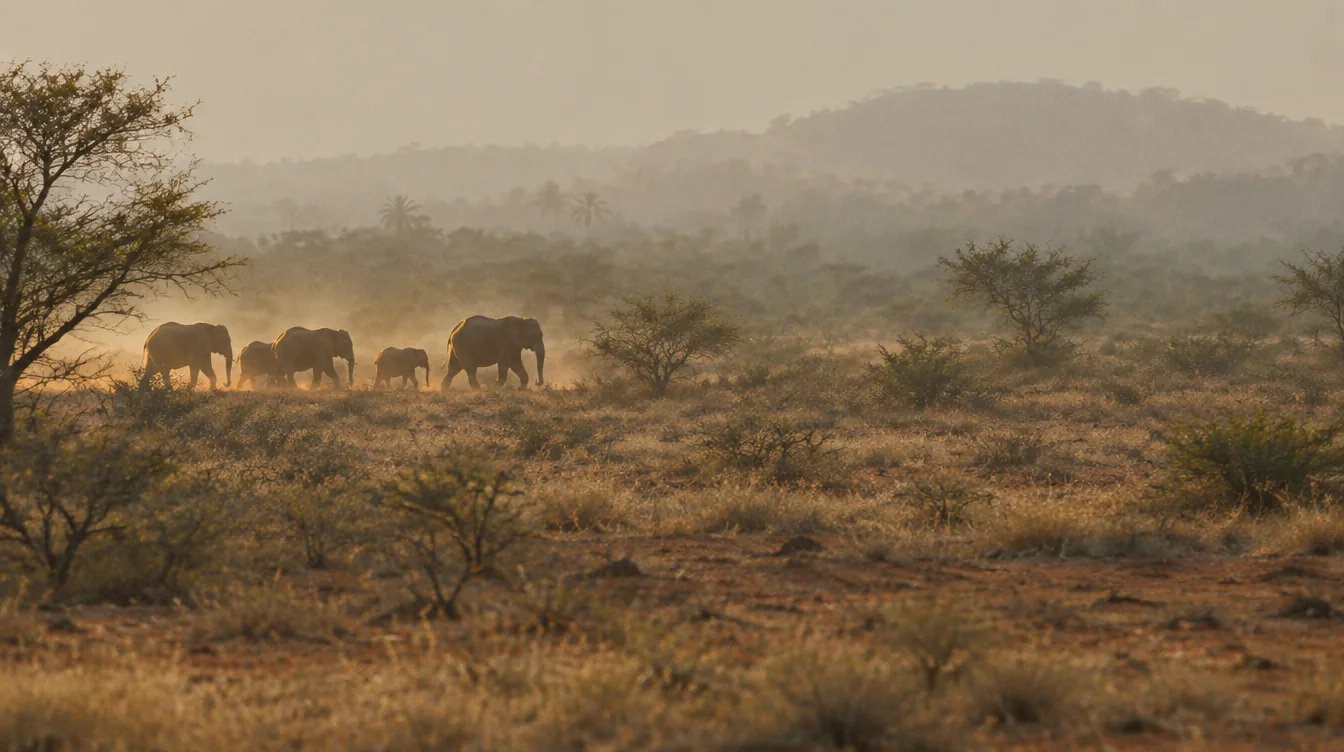
- Known for
- One of the highest leopard densities anywhere
- The busy part
- Block 1 — roughly a seventh of the park, most of the traffic
- Gate
- Morning drives start around 6am
- Nearest base
- Tissamaharama, or a lodge on the park boundary
- Pairs with
- The south coast — it's at the end of the same road
Yala has among the highest recorded leopard densities anywhere — roughly one leopard per two square kilometres in Block 1. That is the reason to come and it is also the reason it can be a disappointing morning if you arrive without a plan.
The thing nobody tells you
The park is large. Block 1 — the part everyone means when they say Yala — is roughly a seventh of it, and it holds most of the traffic because it holds most of the sightings.
In February at six in the morning, Block 1 can mean a line of Jeeps at the gate and, when something is spotted, twenty vehicles converging on one radio call. You will probably see a leopard. You may also see it through a gap between two other vehicles while a driver you’ve never met reverses into your morning.
That’s the honest picture. Whether it bothers you is a real question and worth answering before you book, not after.
The alternative inside the same park
Blocks 3 and 5 are open, far quieter, and have leopards — just fewer of them per square kilometre and no convoy to follow to them. A morning there feels like the thing people imagine when they picture a safari.
Which we’d put you in depends on your month and on what you actually want. Someone with a long lens and one shot in mind goes to Block 1. Someone who wants a morning in a wild place goes elsewhere. Most operators won’t ask you the question — they’ll book Block 1 because it’s what gets the review.
When to come
February to July is the dry window, and dry is what matters: the water shrinks back to a few places and the animals come to them. Outside that the park is greener, prettier and considerably harder.
Block 1 has historically closed for maintenance for about a month around September. The dates shift year to year and it’s the kind of thing worth confirming for your specific dates rather than assuming.
How long
Two nights. The whole case rests on morning drives, and two nights buys you two of them.
We’d rather give you two mornings at Yala than one morning each at two different parks. The second drive is where the odds compound — different light, different route, and a driver who now knows what you haven’t seen yet.
Where it fits
Yala sits at the end of the south coast road, which is the useful thing about it. If you’re already spending time on the beaches past Tangalle, the park is an hour or so further on rather than a separate expedition.
That’s why our south coast routes tend to finish here rather than starting with it. You arrive already unwound, and the 5am start costs you less.
What we’d actually tell you
If a leopard photograph is the point of your trip, come in February to July, accept Block 1 and its crowds, take two mornings, and your odds are about as good as this gets.
If you want a wild morning more than you want the picture, we’d send you to a quieter block — or to Wilpattu, on the other side of the country, where you’ll see less and remember it differently.
What sits within reach.
Before you build a trip around it.
Want this in the route?
Tell us your month.
A few short questions, one of our team on the other end. Reply within 48 hours — no funnels, no call centres, no auto-replies pretending to be people.